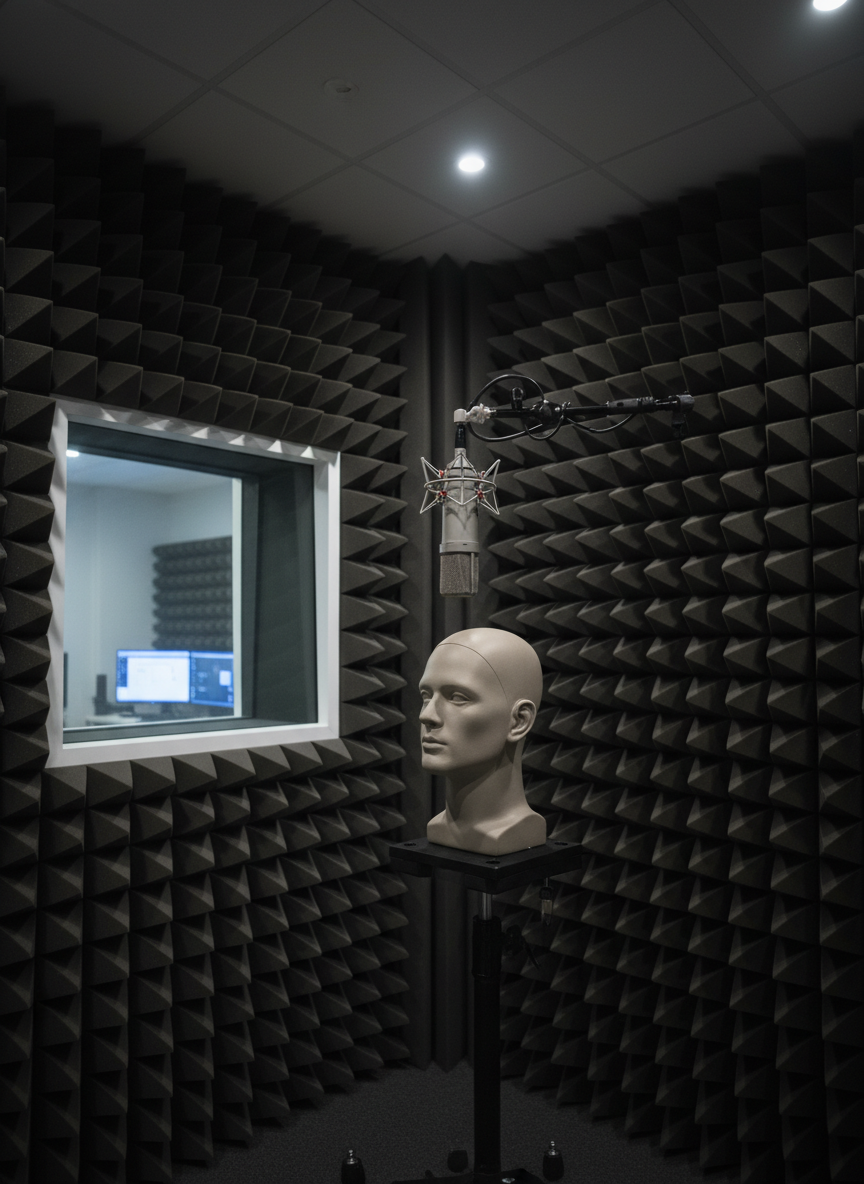
A high-fidelity recording setup in an acoustic testing booth, featuring a single studio-grade condenser microphone suspended in front of a carefully shaped dummy head with lifelike outer ears, all atop a dark acoustic stand. The walls are lined with alternating charcoal and graphite acoustic foam wedges, their textures sharply defined. A small, glass-paneled observation window reveals a blurred control room with glowing monitors. Overhead, diffused ceiling LEDs cast even, neutral light, while a subtle rim of reflection outlines the microphone grille. Photographic realism, shot from a slightly low angle with centered composition, emphasizes technical precision and controlled quiet, creating a professional, contemplative mood for discussions of spatial hearing and sound localization.

Concept Library

Short, plain-language guides to the auditory concepts, tools, and analyses mentioned across Merri Meanders.

Formats
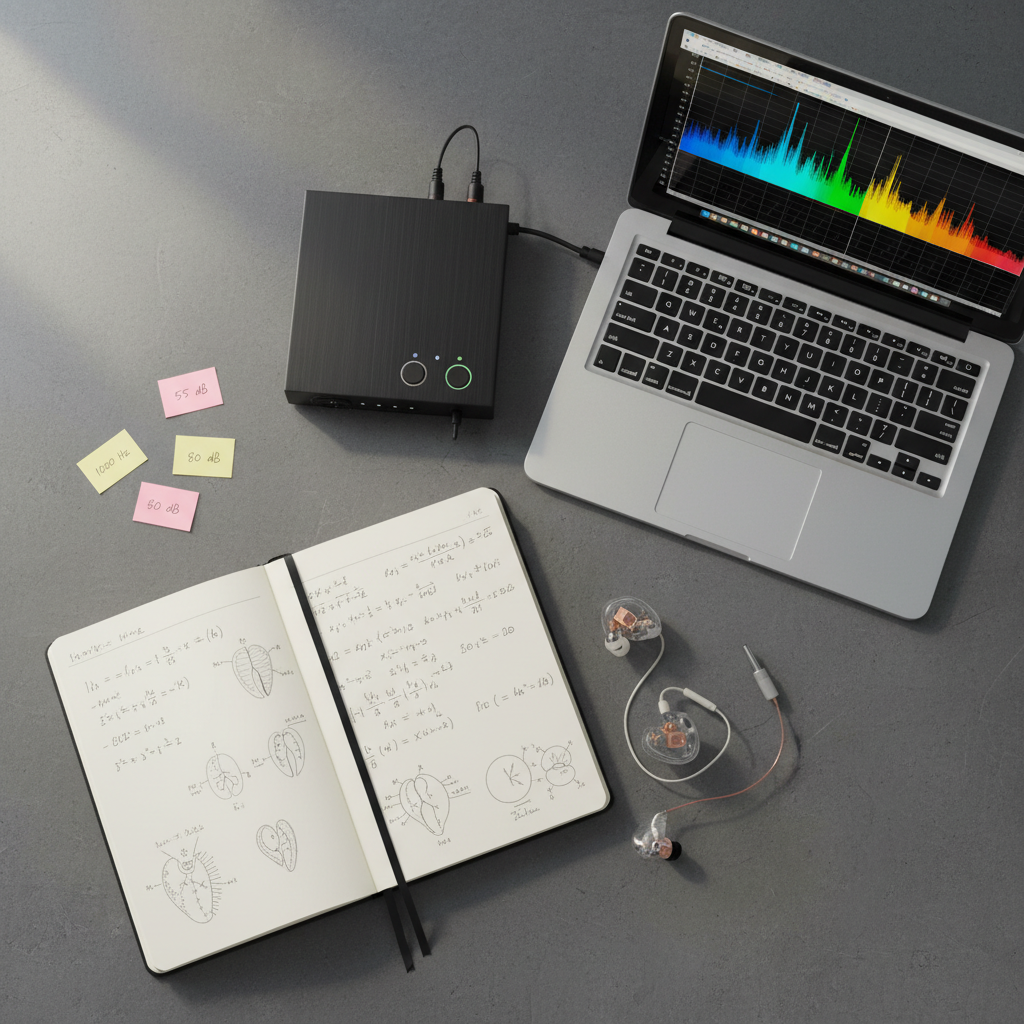
An overhead, documentary-style photograph of a well-organized auditory neuroscience workspace: a slate-gray tabletop with a neatly opened lab notebook filled with clean, handwritten equations and tiny cochlear sketches; a laptop showing a colorful spectrogram; a compact audio interface with glowing status LEDs; and a pair of carefully folded in-ear monitors with transparent housings revealing tiny drivers. A subtle scattering of sticky notes bears small frequency values and decibel levels. Soft, indirect afternoon light from a nearby unseen window creates gentle gradients and minimal shadows, emphasizing clarity and order. Photographic realism with sharp focus throughout and a balanced, top-down composition conveys a thoughtful, methodical atmosphere aligned with professional scientific exploration.

Dive into accessible explainers, protocol walk-throughs, lab hacks, and gear spotlights grounded in real auditory neuroscience practice.
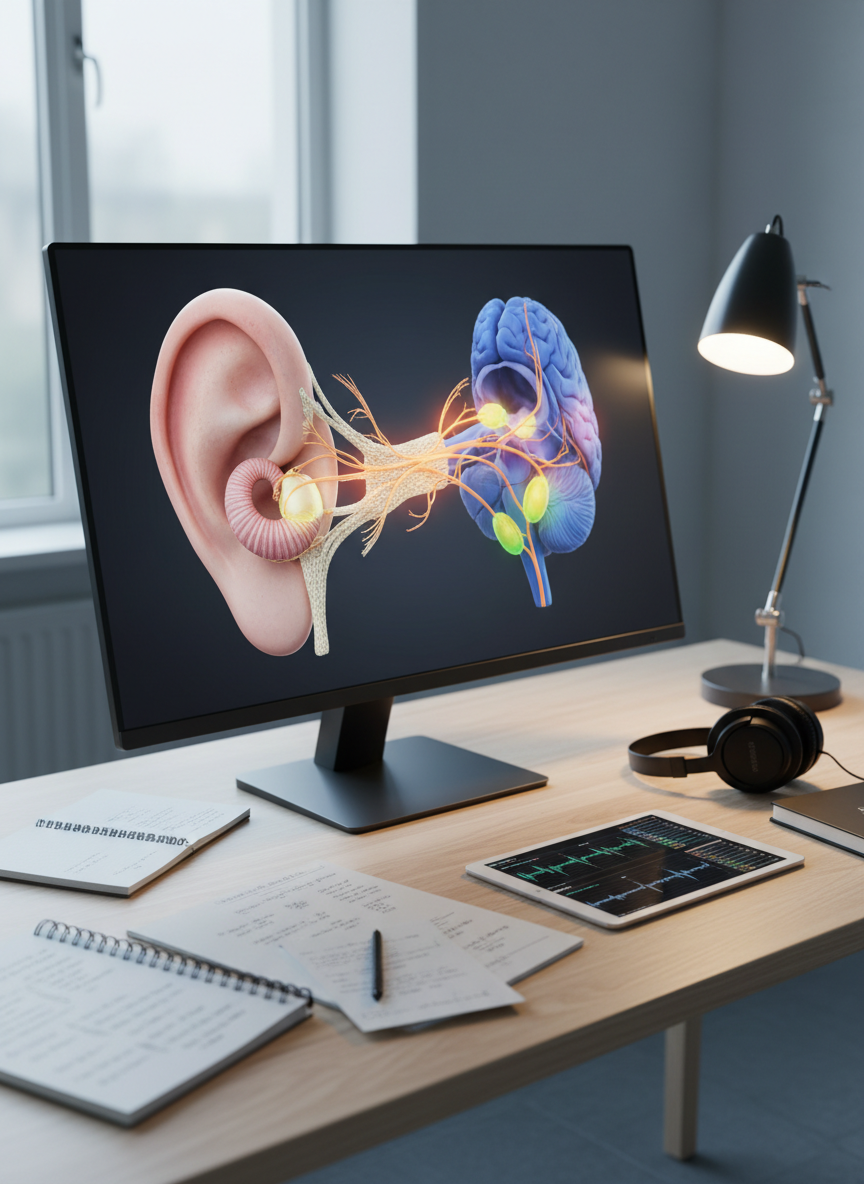
An anatomically accurate 3D model of the human ear and auditory pathway displayed on a sleek, frameless 4K monitor atop a light birch desk. The cochlea, auditory nerve, and brainstem nuclei are vividly rendered in natural, clinical colors, with fine textures on neural tracts and subtle glow highlighting key pathways. Around the monitor lie neatly arranged research notebooks, a tablet with waveform plots, and noise-cancelling lab headphones. Cool, indirect daylight filters in from the left, balanced by soft warm task lighting from a minimalist desk lamp. The scene is photographed in realistic detail with a slightly elevated angle and moderate depth of field, creating a precise yet inviting mood, ideal for explaining auditory neuroscience concepts visually.

These pieces translate jargon, compare methods, and annotate figures so complex auditory studies feel readable, reproducible, and relevant.

About

Build Your Auditory Toolkit

Browse static maps, glossaries, and cheat-sheets that connect blog stories to their underlying physiology, psychoacoustics, and signal-processing. Skim before reading, or return while you explore papers and protocols; each entry links related posts and suggested primers so you can deepen, refresh, or cross-check your understanding without wading through a textbook.